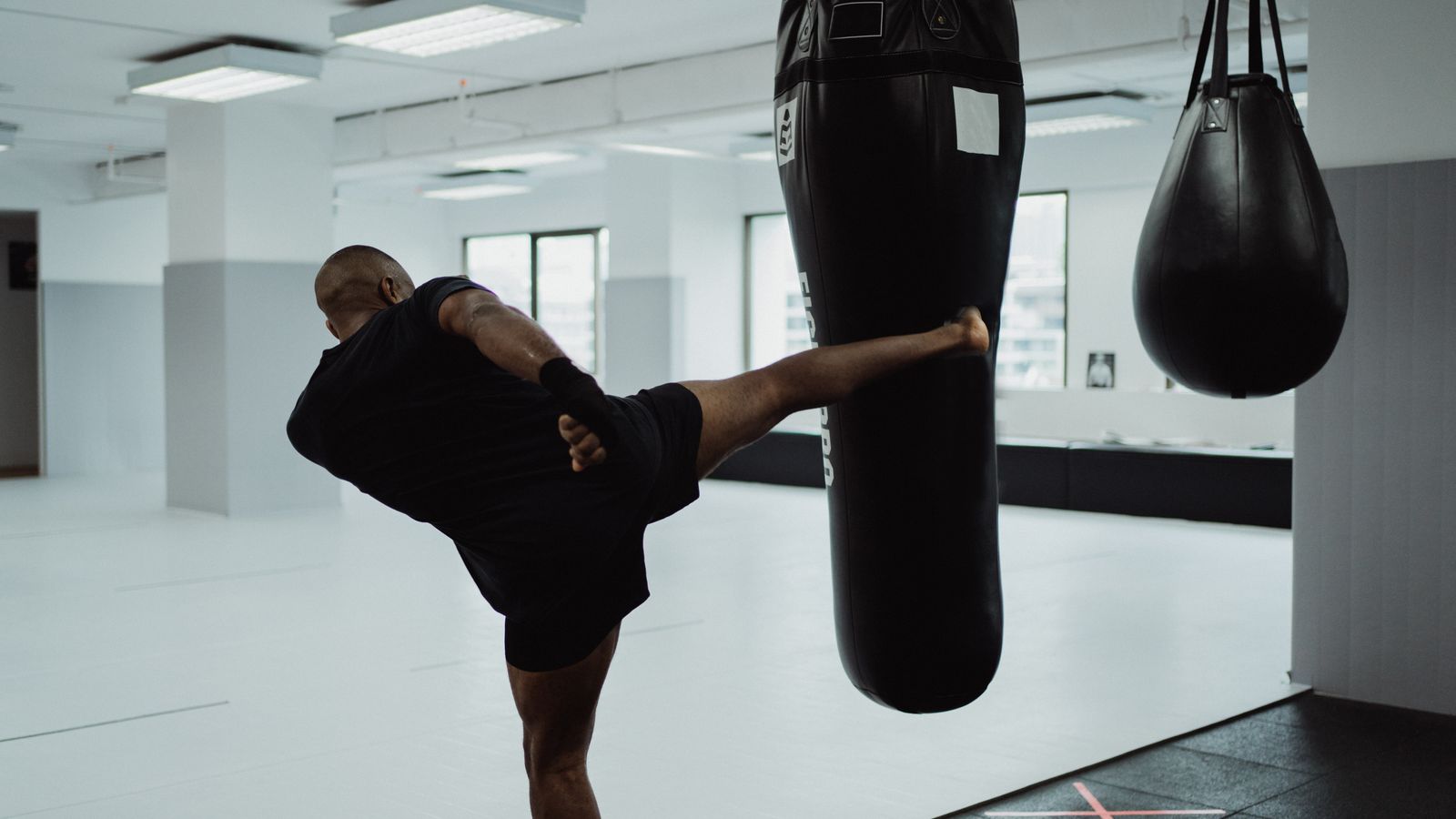
HIIT and spin classes have been the default Singapore fitness choice for years. They are time-efficient, the calorie burn is real, and the studios are everywhere. But the dropout rate is brutal. Most people who sign up for unlimited HIIT or spin memberships are gone within three to six months. Muay Thai retention is different, and the reason is not motivation, it is structure.
The hourly burn comparison
For a 70 kg adult, one hour of:
- Spin class (moderate): 500 to 700 calories
- Spin class (intense, like a Barry's-style ride): 600 to 800 calories
- HIIT bootcamp: 500 to 700 calories
- CrossFit class: 500 to 800 calories
- Muay Thai (moderate): 600 to 750 calories
- Muay Thai (intense): 800 to 1000 calories
The problem is that hourly burn does not translate to weekly or yearly weight loss. Consistency does.
Why most people quit HIIT and spin
HIIT and spin classes are excellent for the first month. They are intense, they leave you sweating, and the music and atmosphere are designed for maximum motivation. Then something happens around week six to ten:
- The classes start feeling repetitive
- The boutique studio fees feel less worth it
- You miss one week and then miss two
- You stop booking because each class feels like the same battery of jumps, squats, and burpees
HIIT and spin classes optimise for short-term intensity. They are designed to make you feel like you got a workout. They are not designed to keep you mentally engaged over years.
Muay Thai is designed to keep you engaged over years because there is something new to learn every single class. Skill development is the structural difference.
The "novelty cliff" problem
Almost every cardio-focused workout has a novelty cliff at 8 to 12 weeks. Spin, HIIT, F45, Barry's, OrangeTheory, and most boutique fitness formats follow the same pattern:
- Weeks 1 to 4: motivated, results showing, attendance high
- Weeks 5 to 8: results plateau, attendance starts slipping
- Weeks 9 to 12: drop to once a week or less
- Month 4 onward: lapse and re-sign-up cycle
Muscle gain comparison
HIIT and spin are mostly cardio with brief bursts of resistance. They do not meaningfully build muscle for most people. After six months of consistent HIIT or spin, the typical body composition change is fat loss with possibly modest muscle gain in legs (for spin) or general core engagement (for HIIT).
Muay Thai loads more muscle groups across more dimensions:
- Kicks build glutes, hamstrings, hip flexors, obliques, and calves
- Punches build shoulders, chest, back, and core
- Knees build hip flexors and core
- Pad holding builds shoulder and grip endurance
Why HIIT and spin appeal anyway
Honest reasons people gravitate to HIIT and spin:
- Workouts are short (45 to 60 minutes including travel)
- No skill required, low entry barrier
- Music and atmosphere are designed for motivation
- Studios are everywhere in Singapore
- Easy to book a single class without commitment
- Social proof, your friends are doing it
The problem is none of these benefits translate to long-term consistency. The same person who finds HIIT motivating in month one finds it monotonous in month four.
What Muay Thai offers that HIIT and spin do not
- Skill progression. Every class teaches something new. Your stance improves, your kicks get sharper, your timing develops. This keeps you engaged.
- Tangible mastery. After six months, you have learned a martial art. After six months of HIIT, you have done 100 burpees.
- Community of trainers, not just instructors. Coaches at a Muay Thai gym remember you, correct your form, and develop you over years. HIIT instructors rotate and rarely know your name.
- Practical capability. Even without sparring, you can move, defend yourself, and feel confident in your body in a way that bodyweight HIIT does not give you.
- A reason to come back tomorrow. You want to drill the technique you struggled with today.
What HIIT and spin do better
To be fair, there are things HIIT and spin do better:
- Lower entry friction. You can take your first spin class today.
- Faster initial calorie burn for low-coordination people. No technique to learn means you reach max effort immediately.
- More predictable scheduling. Most spin and HIIT studios run dozens of classes a week.
- Easier to do solo. You do not need a partner.
The Singapore-specific argument
Singapore has dozens of HIIT and spin studios. Most operate boutique-style with SGD 35 to 50 drop-ins and SGD 200 to 400 monthly memberships. Muay Thai gyms sit in the same price range.
But the typical Muay Thai member stays for years. The typical boutique HIIT member stays for months. Cost per actually-attended class works out favourably for Muay Thai over a long enough horizon.
When HIIT or spin makes sense alongside Muay Thai
Many of our members at Khao Noi Gym still do an occasional HIIT or spin class. The combination that works:
- Three Muay Thai sessions per week as primary training
- One HIIT or spin session per week for variety and pure cardio
- One rest day
What does not work as well: HIIT and spin as primary training with occasional Muay Thai. The Muay Thai habit does not stick if it is not your main thing.
The honest test
The simplest way to decide:
- Look back at the last 12 months
- Count the workout formats you have tried
- Count how many you stuck with for more than three months
How to switch over
If you are coming from HIIT or spin and want to try Muay Thai:
- Book a single trial class at Khao Noi Gym
- Plan to train two to three times per week, no more for the first month
- Expect to feel awkward for the first few classes (HIIT and spin do not prepare you for technique-based work)
- Stick with it through the first two weeks. The "I am bad at this" phase is short
The hourly calorie burn is similar. The reason you will weigh less six months from now is that you will still be training.